
Fairfield Township Previous Residents Sources
One address has several kinds of historical evidence. The Recorder establishes recorded land events. The Auditor provides the current parcel and transfer bridge. Directories, census schedules, newspapers, and local collections offer time-stamped observations of people or events. Probate files can supply estate timing and heirs. None of those records should be joined into a continuous story without retaining the source, date, and role it actually shows.
| Source | Years it covers | Where held | What it shows |
|---|---|---|---|
| Recorder real-property search | 1800-01-01 to the portal's current certification | Butler County Recorder | Recorded documents, parties, dates, book/page, and legal descriptions |
| Auditor parcel and transfer record | Current web system | Butler County Auditor | Present parcel, owner role, transfer pointer, tax and property details |
| Lane directories and reverse directories | Individual volume years must be confirmed | Smith Library or Cummins Room | Address or name snapshots in a relevant volume |
| Fairfield Echo | 1956-2013 publication | Lane Libraries | Local notices, obituaries, property, and community context |
| Federal census | Released after the 72-year rule | National Archives and library access | Historical household snapshot, not current evidence |
| Probate estate indexes | Decedents' estates from August 1947; wills-deposited index from 1883 | Butler County Probate Court | Estate timing, heirs, and disposition leads |
Start at the date you need. A recent ownership question begins at the Auditor and Recorder. A past household question begins with a directory volume or newspaper period after the parcel identity is stable. Older material benefits from Lane staff, maps, and the historical society rather than a guess about missing years.
Start Fairfield Township Previous Residents by Parcel
The Butler County Auditor Property Records system gives the current bridge into a house-history search. Run the physical address, then retain the returned situs address, parcel ID, legal description, displayed owner role, mailing-address role, transfer date, and available transfer pointer. The Auditor profile can also show valuation, land, structures, permits, sketches, maps, photos, taxes, and assessments. Those categories give context, but they do not establish who lived at the property.
The owner mailing address can differ from the situs address because it is a correspondence field. Treat it as a dated owner-field value, not as proof of a household. If the property is near a border or an older document uses a different place label, open the Auditor GIS layers before assuming the street's current postal city defines the historical jurisdiction.
A useful work note has one row per transition: physical address, parcel ID, legal description, Auditor transfer date, Recorder document number or book/page, grantee, grantor, recording date, document type, and the next earlier item to inspect.
Note: The parcel ID and legal description are the safer links when an older source uses a different street, city, or postal form.
Follow the Butler County Deed Chain
The recorded chain is the core previous residents ownership trail. Use the Auditor transfer information to narrow an approximate date, then search the current recipient as a grantee in the Butler County Recorder advanced search. Check the document type, recording date, parties, book/page or document number, and legal description. The prior owner often appears as grantor on that instrument. Search that earlier party as grantee and compare the legal description before continuing.
- Locate the present physical address in the Auditor system and copy the parcel ID, legal description, and transfer clue.
- Search the recipient as grantee in the Recorder index, using a date range when the transfer line suggests one.
- Open the deed and capture its grantor, grantee, type, recording details, and legal description.
- Search that earlier party as grantee for the prior acquisition while holding the legal description constant.
- When a description changes, pause for a plat, replat, map, or transfer clue instead of assuming the same street number denotes the same parcel.
- Grantor
- The party conveying an interest in the recorded instrument.
- Grantee
- The party receiving an interest in the recorded instrument.
- Chain of title
- The documented sequence of recorded interests, checked from one transfer to the preceding one.
- Legal description
- The recorded land wording used to test whether deeds concern the same parcel when an address changes or varies.
The Recorder advanced-search screen shows the grantor, grantee, date, document, book/page, OCR, and legal-description controls used in this step.
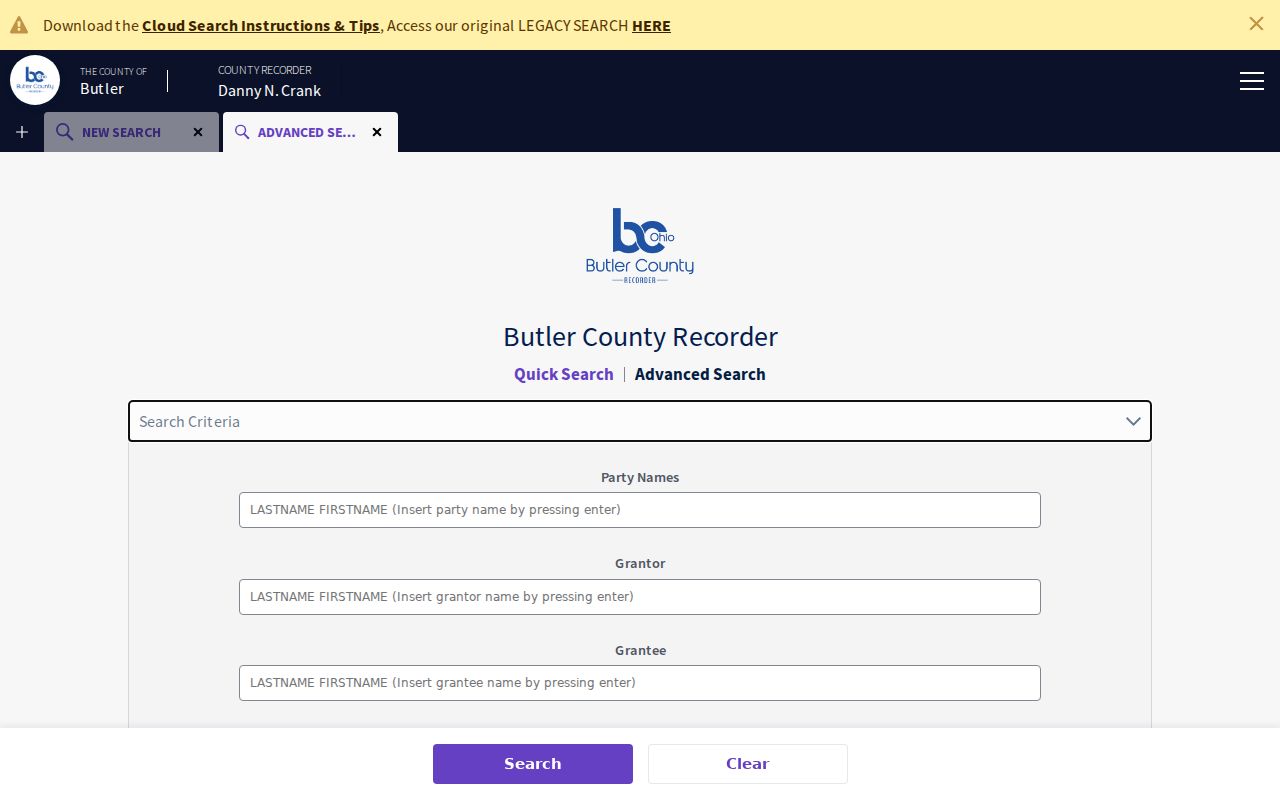
A name match should remain tied to the parcel's legal description and document role, especially when a surname appears in several local records.
Recorder Access Across Fairfield Township Eras
Butler Recorder's portal displays a real-property start date of 1800-01-01, and the Recorder says its imaging project is complete with all records online. That is a substantial advantage for tracing previous residents through ownership records, but it does not mean every old deed will be found by a modern street address. The portal retains City Legal, Subdivision Legal, Township Legal, and Condo Legal fields, as well as Book and Page and OCR search, because older land research still depends on the recorded description and spelling.
Legacy Deed Index Books 45 through 51 are visible in the portal for the 1979-1987 sequence: Book 45 covers June 1979 to May 1980, and Book 51 runs from December 1985 to January 1987, with the other books bridging the periods between. Preserve the book number as a research clue. For an older or unclear result, the Recorder counter and Lane map or directory context are safer than inventing a cutoff.
The Recorder's free Property Alert service can watch a name, keyword, found document, property description, or address in new real-property filings. It is useful at the current end of a property record, not as evidence of a past household, and its terms do not promise fraud prevention.
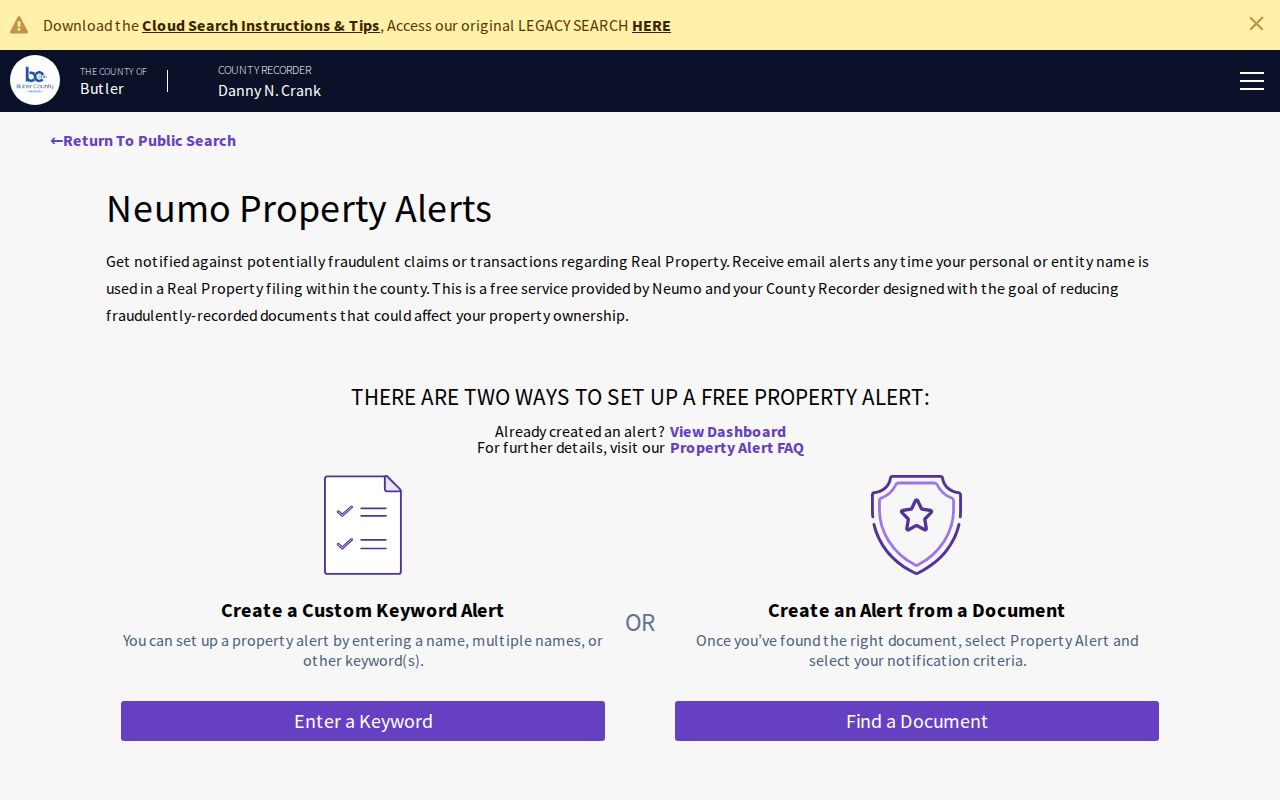
New-filing alerts complement a current ownership review, while the deed chain remains the documented method for walking backward.
Note: The displayed Recorder start date does not guarantee an exact-name result when an older instrument uses a variant spelling or legal description.
1954 Fairfield Township Address Trap
Historical place labels need special care here. In 1954, the southern portion of Fairfield Township became the City of Fairfield, while northern and certain southern portions remained township. The township identifies retained areas involving East River Road, Georgetown Road, odd-numbered addresses, and State Route 128. A source may therefore say Fairfield Township, Fairfield, Hamilton, or another postal place during the history of nearby land.
Search the present address alongside the road or route, legal subdivision, parcel ID, and applicable city or township variant. No inspected official source documented a township-wide street-renumbering project or an exact local Sanborn-map run. Lane's maps, atlases, property-history service, and contemporary newspapers are the verified fallback for a difficult older address.
That 1954 change is an address-continuity trap, not proof that a house moved or that records belong to a different parcel. The legal description and transfer record are the stable tests.
Fairfield Township Past Household Evidence
Recorded owners are only one part of the story of who lived here before. Lane Libraries can supply the dated household layer through city, telephone, reverse, and criss-cross directory holdings when the relevant volume exists. Exact title and year runs were not exposed in the online catalog inspection, so ask Smith Library or Cummins staff to confirm the Hamilton, Fairfield, Fairfield Township, road, and postal-place variants that apply to the address.
- Choose a date-appropriate directory after the parcel and era are known.
- Copy the volume title, publisher, year, page, address, name, spouse notation, listed affiliation, and abbreviation key.
- Repeat at useful intervals, comparing initials, spelling, address, and other published notation.
- Pair each directory year with the nearest released federal census and then test the result against deeds, newspapers, probate, or maps.
A directory is a dated observation. A census is a released historical household snapshot. A deed is a land event. Keeping those evidence types distinct avoids creating a continuous residence claim from one listing. The collection-level search is covered on the Fairfield Township city directory page.
Fairfield Township Previous Residents in the Echo
Lane's historical newspapers can bridge intervals between directory volumes. Fairfield Echo was published from 1956 through 2013. Lane holds microfilm for 1970-1981 and 1987-2013, plus digitized material for 1982-1987. The Fairfield Journal-News has 1973-1974 material in an external database and 1978-1979 microfilm or digitized coverage. Venice Graphic adds a much earlier 1887-1912 window, and Hamilton titles extend the search into the nineteenth century.
Use a notice, obituary, advertisement, property item, or community report as contemporaneous context. Record its issue date and page, then compare it with the parcel and directory date. A newspaper reference can narrow a date range, but it should not be treated as proof of every household member or a permanent connection to the address.
Note: Lane labels formats and spans separately, so a title listing should be checked for the exact year and medium before a missing issue is assumed lost.
Probate Closes Fairfield Township Gaps
When an ownership trail reaches an estate, Butler County Probate Court offers a separate record route. Its historic inventory includes guardians from 1847 to the present, wills-deposited receipts from 1883 to the present, decedents' estates from 1947 to the present, estate docket series through 1982, and real-estate-record books for 1927-1998. The online search may have posting delays, and the court is the place for verified information or confidential-matter limits.
The Butler County Probate Court is the appropriate source for estate and related probate records.
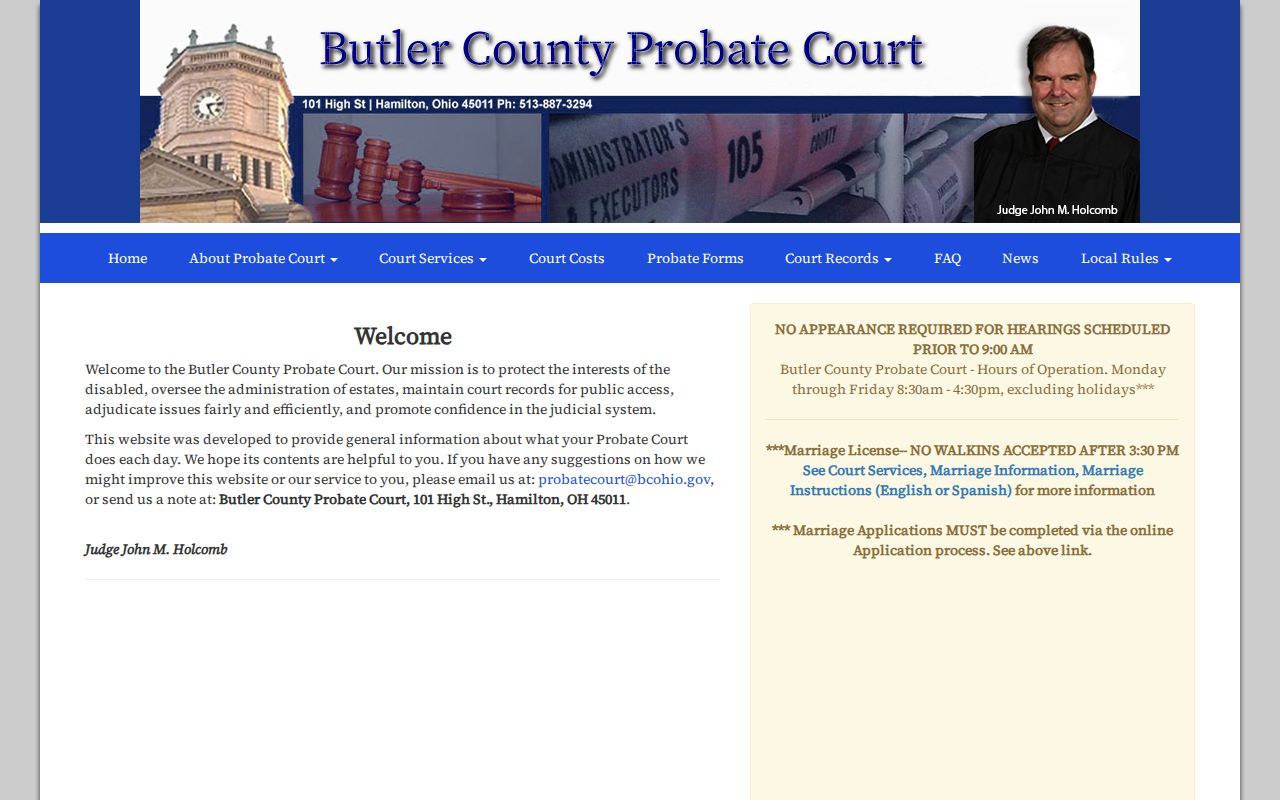
An estate record can explain a transfer or supply an heir lead, but the deed and legal description still anchor the parcel history.
Courts Keep Separate Historical Trails
A court record can be useful for a dated event, but it is not an address directory or a replacement for the Recorder. Probate retains estates, guardianships, marriage licenses, name changes, adoptions, and related matters. Butler County Clerk of Courts retains Common Pleas General and Domestic Relations material and Twelfth District appeals. Federal proceedings, if a documented historical question points there, use a separate federal docket system rather than a county land index.
The official PACER federal court records portal is shown here to distinguish that separate federal route from Butler County parcel and deed research.
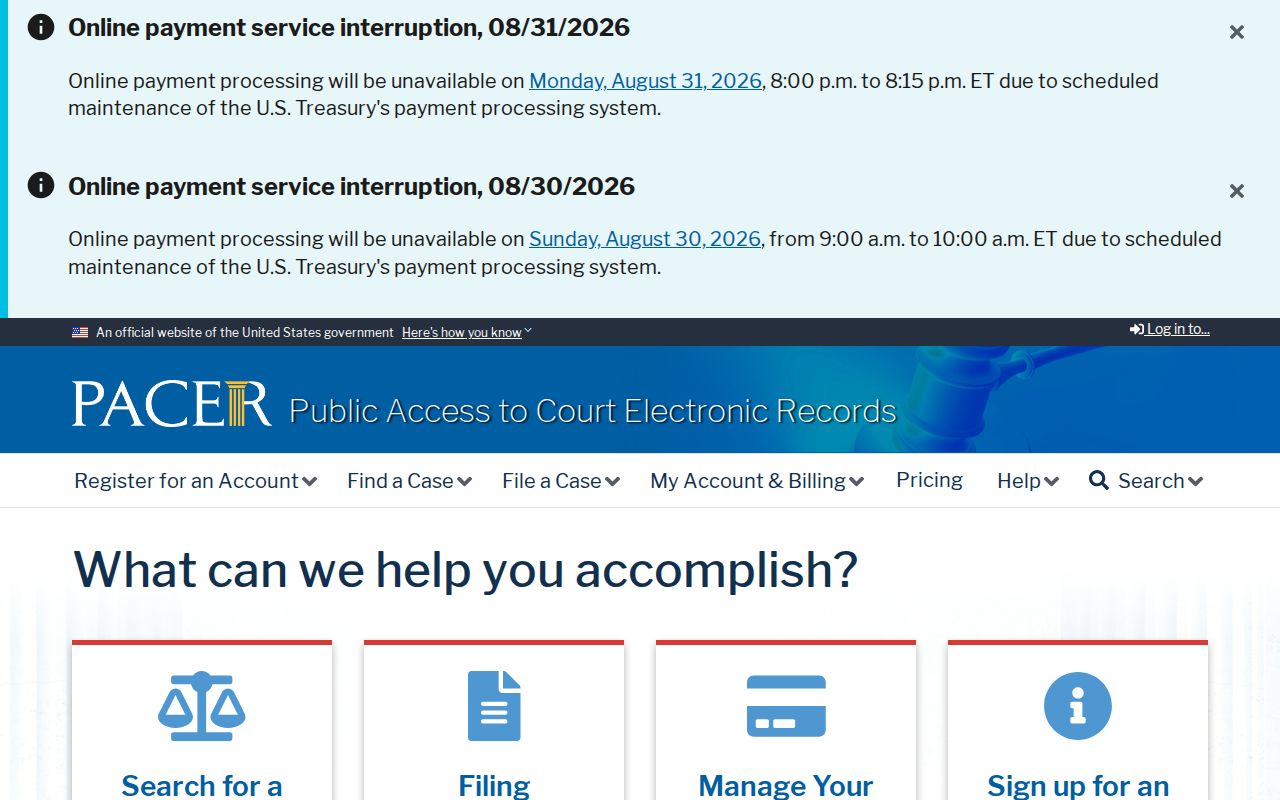
A court filing should be read for its case role and date. It does not establish that a person lived at a Fairfield Township address.
Note: Court posting delays and confidentiality rules mean verified information comes from the court that keeps the particular record.
Ask Lane About Fairfield Township Property History
When the online trail becomes thin, give Lane Libraries or the relevant county office a usable request: parcel ID, legal description, historical place labels, approximate date range, and any Recorder book/page or document number. That information is more precise than a street address alone, especially around the 1954 boundary change. Lane accepts local property-history, genealogy, obituary, military, photo, and local-history research requests and maintains maps, directories, newspapers, and Fairfield history resources.
The Butler County Historical Society provides a second local fallback, with early marriage compilations, census data beginning in 1803, obituary and other clippings, military material, and the Journal-News morgue and photo archive. Its records generate leads that can be checked against the parcel and recorded-document trail.
Lawful Fairfield Township House History
Previous residents research works best as property history, family history, or local-history work. Historical sources can be incomplete, and ordinary parcel records do not reveal every occupant. Safe at Home information, protected voter records, medical material, and other exempt information remain outside an address trail. The Ohio Public Records Act also gives custodians redaction duties for protected material.
Lawful use. Use Fairfield Township house-history records for personal, lawful research. Do not use historical address information to stalk, harass, intimidate, or harm any living person.
For a correction, certification, or access question, contact the Recorder, Auditor, Probate Court, Lane Libraries, or other original custodian that created or holds the particular record.